
What Makes a Cocktail Taste Balanced?
You know a well-made cocktail when you taste one. Nothing jumps out too much. It isn't overly sweet, painfully sour, or dominated by the alcohol. Instead, everything seems to work together.
That quality is usually described as balance; and it's one of the most important ideas in making a great cocktail. But what exactly are we balancing?
The Building Blocks of a Balanced Cocktail
A classic way to think about cocktails is in terms of a few basic elements: strong, sweet, sour, and bitter. Not every cocktail contains all four, and modern cocktails can get considerably more complicated. But these building blocks are a useful way to understand why certain combinations just work.
Strong is usually the base spirit, vodka, gin, whiskey, rum, tequila, and so on. The spirit gives a cocktail its foundation and much of its character.
Sweet softens the sharper edges of alcohol and acidity. That sweetness might come from simple syrup, honey, fruit, liqueurs, or other ingredients.
Sour provides acidity and brightness. Citrus fruits such as lemon, lime, and grapefruit are cocktail staples for a reason: acidity can make a drink feel fresh and lively while keeping sweetness in check.
Bitter adds complexity and contrast. Sometimes that's literal cocktail bitters, but bitterness can also come from citrus peel, botanicals, herbs, or certain spirits and liqueurs.
The trick isn't getting equal amounts of everything. It's getting them to complement one another.
Balance Doesn't Mean You Can't Taste the Spirit
A balanced cocktail shouldn't necessarily hide the alcohol. In fact, the character of the base spirit is often a big part of what makes a cocktail interesting. Gin brings botanicals. Whiskey can contribute oak, spice, vanilla, or caramel notes. Vodka can provide a clean foundation that lets other ingredients take center stage.
That spirit base is also one of the things that distinguishes a true cocktail from many other ready-to-drink beverages. If you're curious about the difference, we break it down in our guide to what to look for in a premium canned cocktail.
Balance means giving those flavors the right supporting cast.
Take grapefruit and vodka, for example. Grapefruit provides both acidity and a slight bitterness, while honey can round out those sharper flavors with sweetness. The vodka remains part of the drink rather than disappearing behind it.
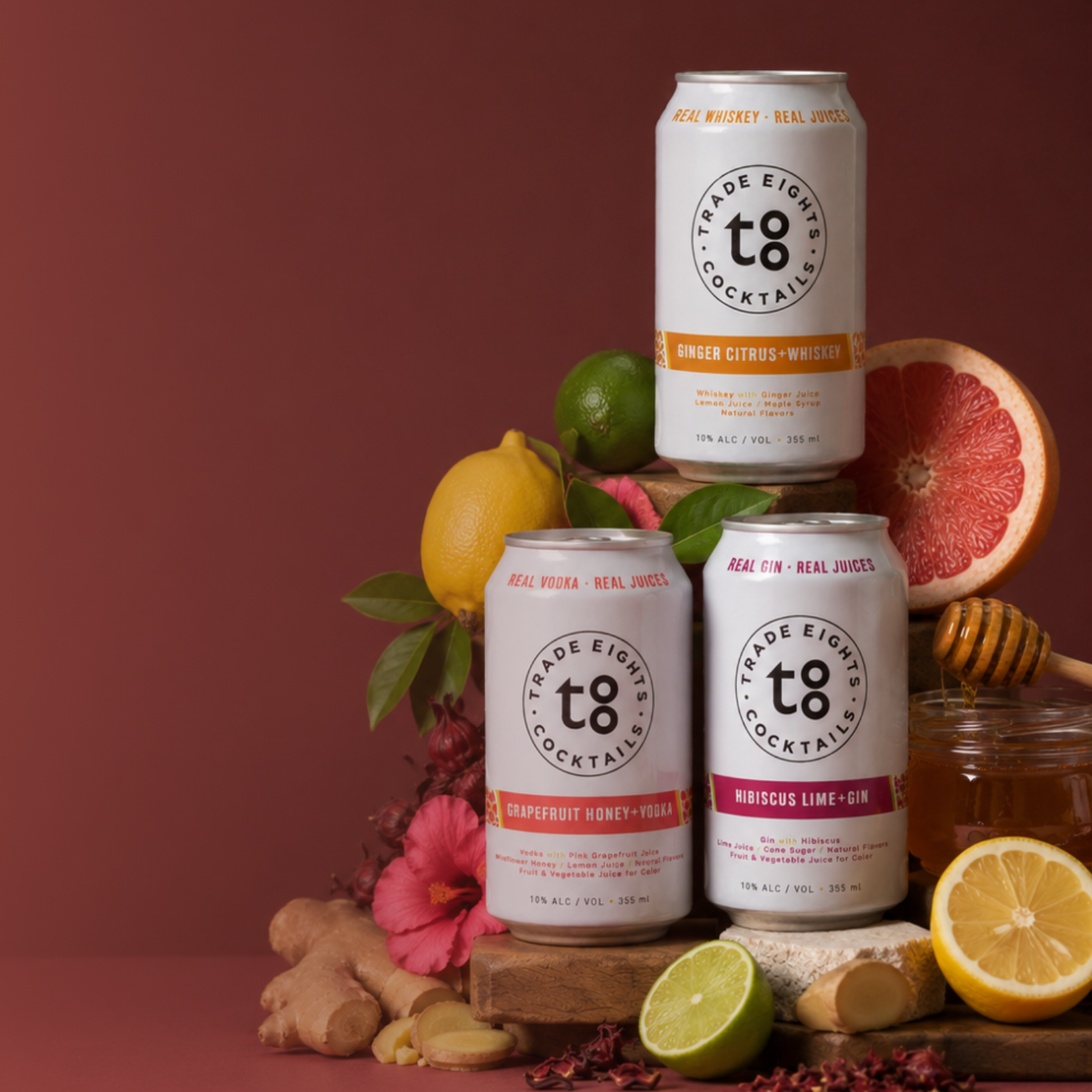
That's the idea behind our Grapefruit Honey + Vodka cocktail: bright grapefruit, smooth honey, and vodka all doing different jobs in the same glass.
Sometimes Contrast Creates Balance
One of the most interesting things about cocktails is that ingredients don't always need to have similar flavors to work together. Often, it's contrast that makes the combination interesting.
Hibiscus is floral and slightly tart. Lime is bright and acidic. Gin introduces another layer of botanicals. Put them together, and those different characteristics can amplify one another without any single flavor taking over.
Our Hibiscus Lime + Gin cocktail was built around exactly that kind of contrast. The same principle applies to Ginger Citrus + Whiskey. Whiskey brings warmth and depth, citrus adds brightness, and ginger contributes spice. The result works because each ingredient pulls the drink in a slightly different direction.
You can explore all three Trade Eights cocktailsand the ingredients behind each one.
Why More Sugar Isn't Always the Answer
When a drink tastes too strong, bitter, or sour, the easiest solution can seem obvious: add more sweetness. Sometimes that works. But sweetness can also overwhelm the flavors that made the cocktail interesting in the first place.
A great cocktail doesn't necessarily need to taste sweet. It needs enough sweetness to balance acidity, bitterness, alcohol, and other flavors. That's an important distinction, and one reason ingredient quality matters so much. When you're working with real spirits, juices, botanicals, spices, and natural sweeteners like honey, there's already plenty of flavor to work with.
The goal isn't to cover those flavors up. It's to help them work harmoniously together.
The Best Cocktails Make Balance Feel Effortless
Of course, nobody should need to analyze sweet, sour, bitter, and strong every time they order a drink.
That's really the point.
When a cocktail is well balanced, you don't spend much time thinking about why it works. You just want another sip. And whether that cocktail was shaken by a bartender or poured straight from a can, that's what we're always aiming for: real spirits, real ingredients, and thoughtfully balanced cocktails.
If you're enjoying a Trade Eights at home, a few simple touches can make a difference, too. Check out our guide to serving a canned cocktail with the right glassware, ice, and garnishes.
Want to taste the difference for yourself? Find Trade Eights Cocktails near you and try all three flavors.
